
June 9, 2026
Taplio's real price tag, account safety risks, and team limitations are pushing users to look elsewhere. Here are the best alternatives.
Taplio is one of the most recognized LinkedIn growth tools on the market, and for the right user, that reputation is earned. It has a useful viral post library, a capable AI post generator, and a Pro-tier lead database that makes sense for individual SDRs who want content creation and prospecting in one place.
The problem is that "the right user" tends to mean a solo creator or individual sales rep willing to pay $69 per month to access the AI features buried behind the Starter plan.
If you're a B2B sales team trying to coordinate LinkedIn activity across 15 reps, or a creator who got an account warning after LinkedIn's 2025 automation crackdown, or someone who just did the pricing math and realized the tool costs three times as much as expected, Taplio starts to feel like the wrong fit.
Most teams hit the same three walls: a pricing structure that hides its real cost, account safety risks from cookie-based automation, and no infrastructure for multi-user coordination. Here are the best alternatives, broken down by what you actually need.
There are three distinct reasons people start searching for Taplio alternatives, and they rarely overlap.
Taplio's Starter plan is advertised at $39 per month, which sounds reasonable. The catch is that the Starter plan includes zero AI credits.
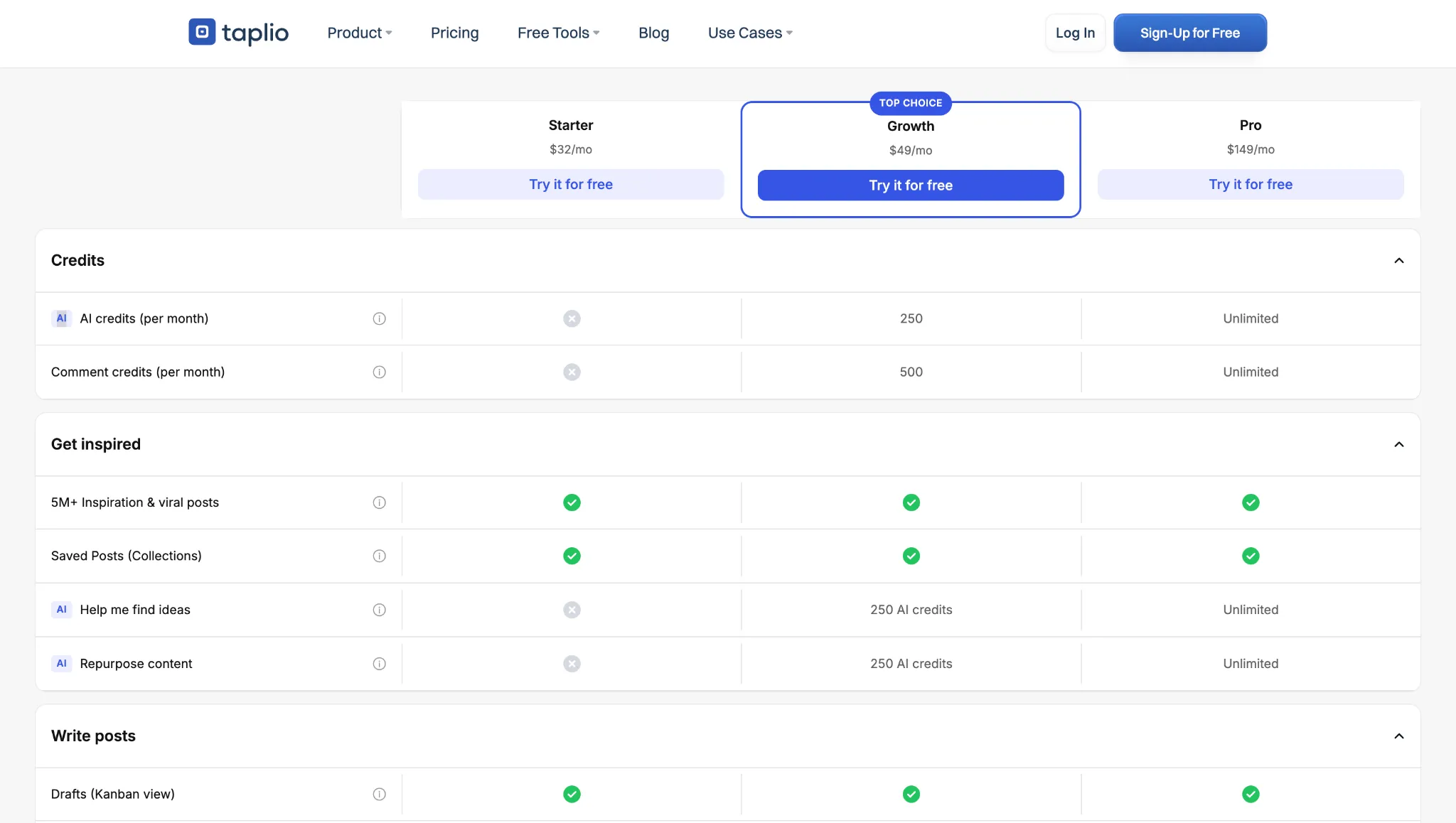
The post generator, hook writer, carousel AI, and AI copilot are all locked behind the Growth plan at $69 per month.
That's a 77% price jump that catches a lot of users off guard. If you want Pro-tier features like auto-DMs and the lead database, you're at $199 per month with no middle tier between $69 and $199
In April 2025, LinkedIn moved against third-party automation tools at scale, restricting accounts connected to cookie-based and extension-based tools.
Taplio's Chrome extension (Taplio X) uses cookie-based session authentication and ships a full automation suite including auto-DM, auto-connect, auto-reply, and bulk messaging.
These are exactly the patterns LinkedIn's enforcement targets. Taplio has since added throttling and pacing controls, and to their credit, they now acknowledge the risk openly on their own site, stating that "there are no LinkedIn tools that fully comply with LinkedIn's Terms and Conditions" and advising users to ramp activity gradually.
That transparency is nice, but it doesn't change the underlying architecture. At least one Trustpilot reviewer reported her account was flagged after Taplio activity exceeded a daily limit:
"This tool got flagged [on my account] and I had to beg them to get it back, so I highly advise [against using] it." The practical risk scales with how you use it.
Scheduling posts is low risk. Running auto-connections and mass DMs on a mission-critical LinkedIn account carries higher risk.
There is no centralized content library a marketing team can populate and a sales team can draw from. There are no approval workflows to maintain brand consistency. There is no mechanism to distribute pre-approved content to 20 reps with one click.
A Product Hunt reviewer summed it up honestly:
"[Taplio is] a bit clunky for multi-user/teams, but it's better than just using native LinkedIn."
For solo creators, that's a minor inconvenience. For a sales organization trying to scale LinkedIn reach across a team, it's a dealbreaker.
If you're a founder, consultant, or creator building your LinkedIn presence solo, here are the tools worth your time.
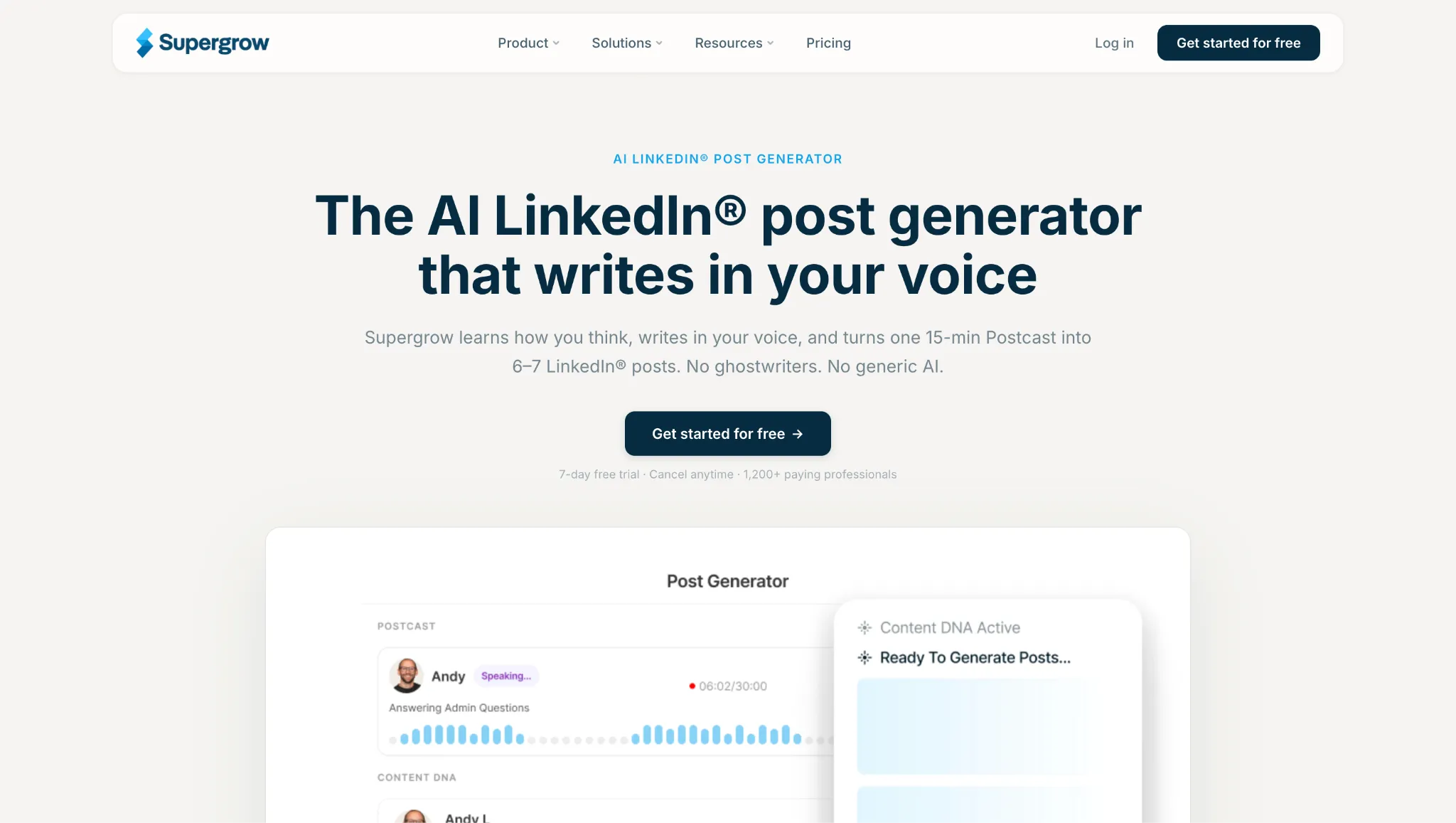
Supergrow is a LinkedIn content platform built around voice learning. Its Content DNA feature builds a model of how you write based on your existing posts, so output gets closer to your actual style over time rather than producing the same generic LinkedIn cadence as every other AI tool.
Best for: Solo founders, consultants, and creators who are tired of AI-generated posts that require 20 minutes of editing before they sound human.
Key features:
Limitations: Analytics are functional but lighter than what dedicated analytics tools offer. The voice model improves over time, so early output may still need editing while it learns your style.
Pricing: Starter at $19/mo, Pro at $39/mo.
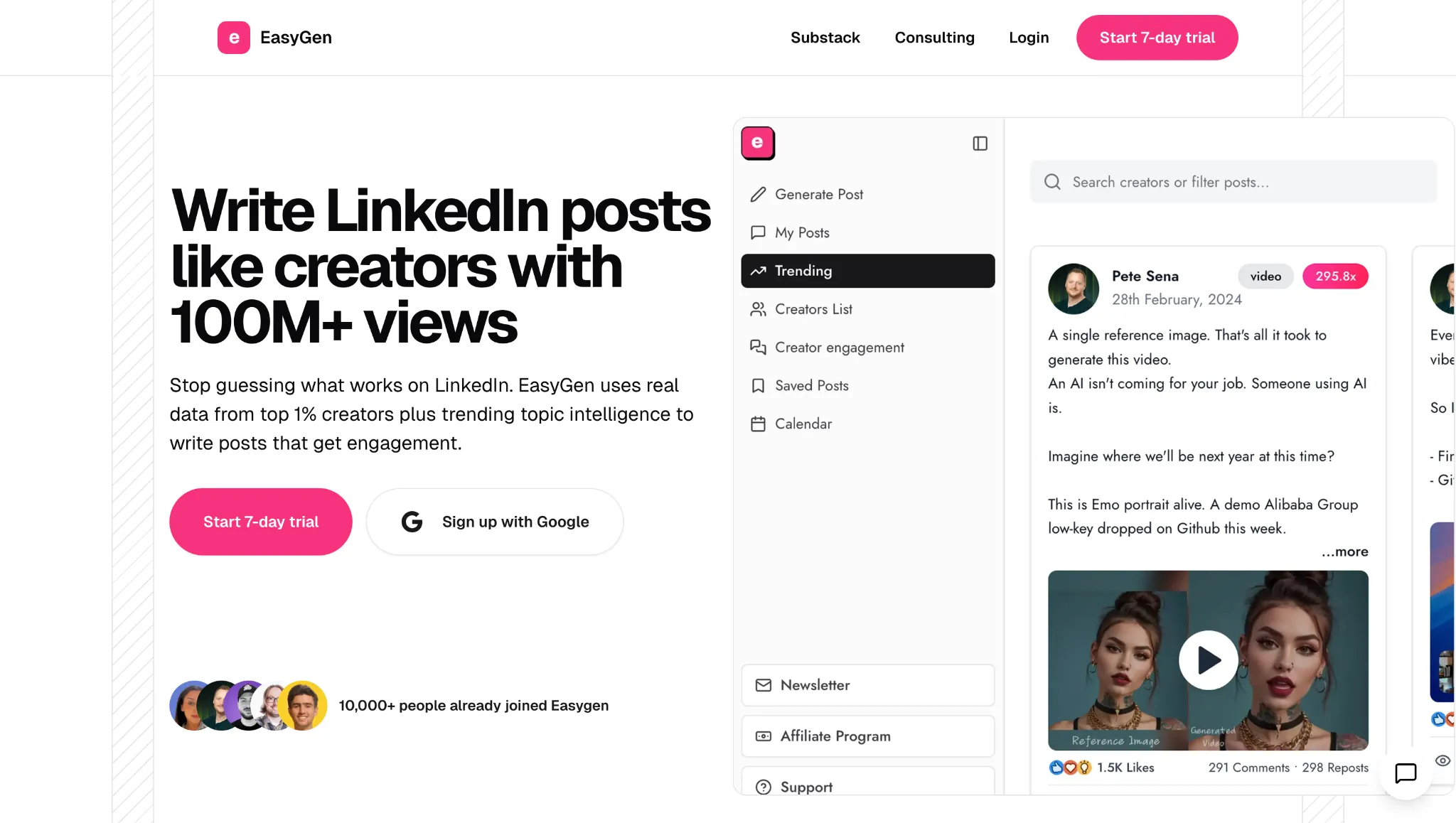
EasyGen’s AI is trained specifically on top-performing LinkedIn posts rather than general internet content, which means it understands the hook structures, line breaks, and pacing patterns that perform on LinkedIn. It is deliberately narrow in scope: write posts quickly, study what works, ship.
Best for: High-volume creators who want to move fast and prioritize LinkedIn-native output quality over a full suite of scheduling and analytics features.
Key features:
Limitations: EasyGen has no auto-scheduling. You generate posts and paste them into LinkedIn manually. There are also no built-in analytics. The Chrome extension carries the same category of account-safety considerations as other extension-based tools (though EasyGen does not include heavy automation features).
Pricing: $59.99/mo, or approximately $49.99/mo on annual billing. 7-day free trial available.
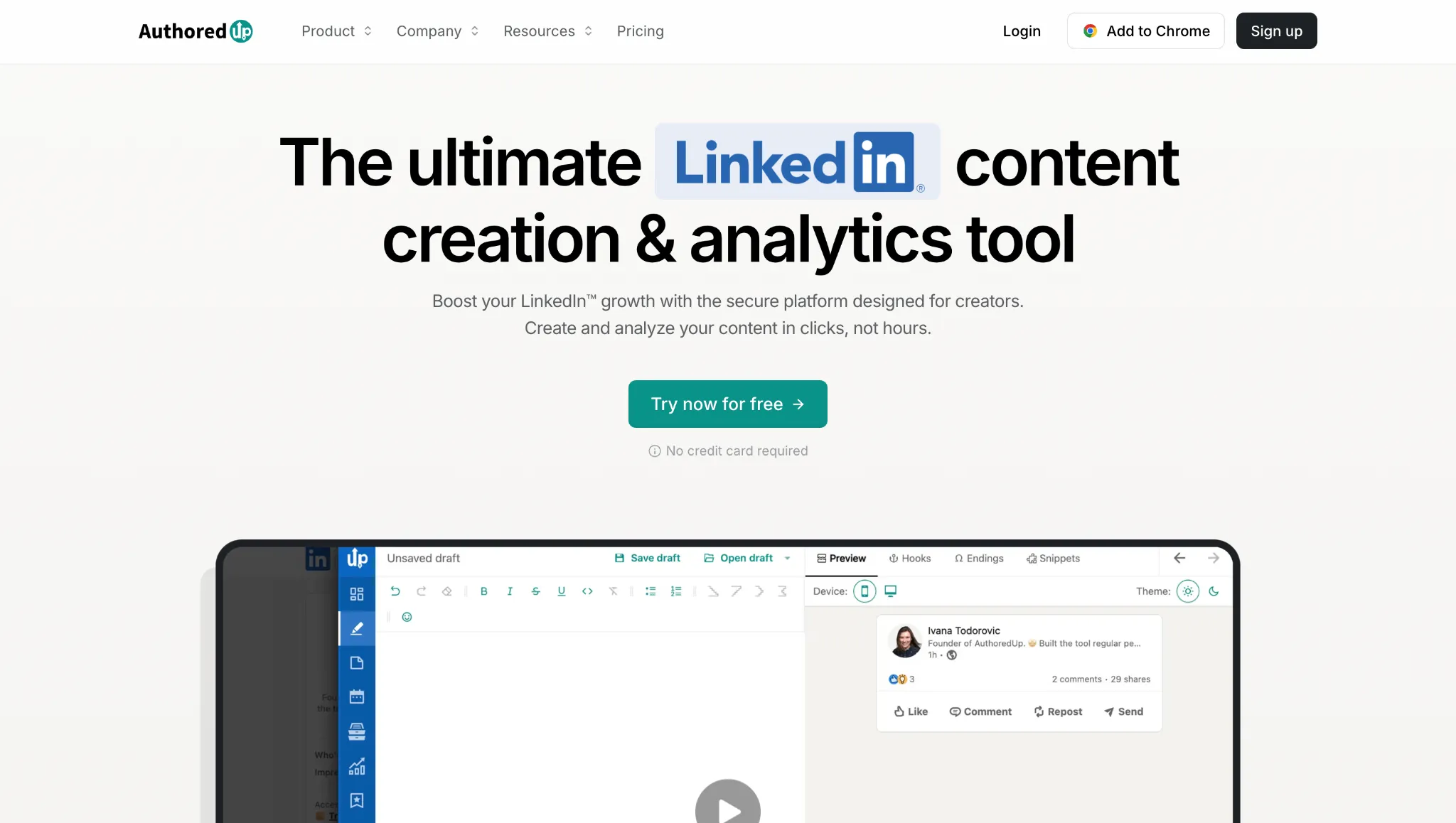
AuthoredUp does not generate AI drafts. Instead, it gives you formatting tools, post templates, a hooks library, and deep analytics that LinkedIn's native editor doesn't have. If you already know what you want to say and just want to say it more effectively, AuthoredUp is for you.
Best for: Experienced LinkedIn writers who have a clear point of view and want polished posts, precise formatting control, and analytics.
Key features:
Limitations: No AI content generation. If drafting posts from scratch is your main bottleneck, AuthoredUp won't solve it.
Pricing: $19.95/mo for individuals, Business plan at $14.95/seat (minimum 3 seats). 14-day free trial, no credit card required.
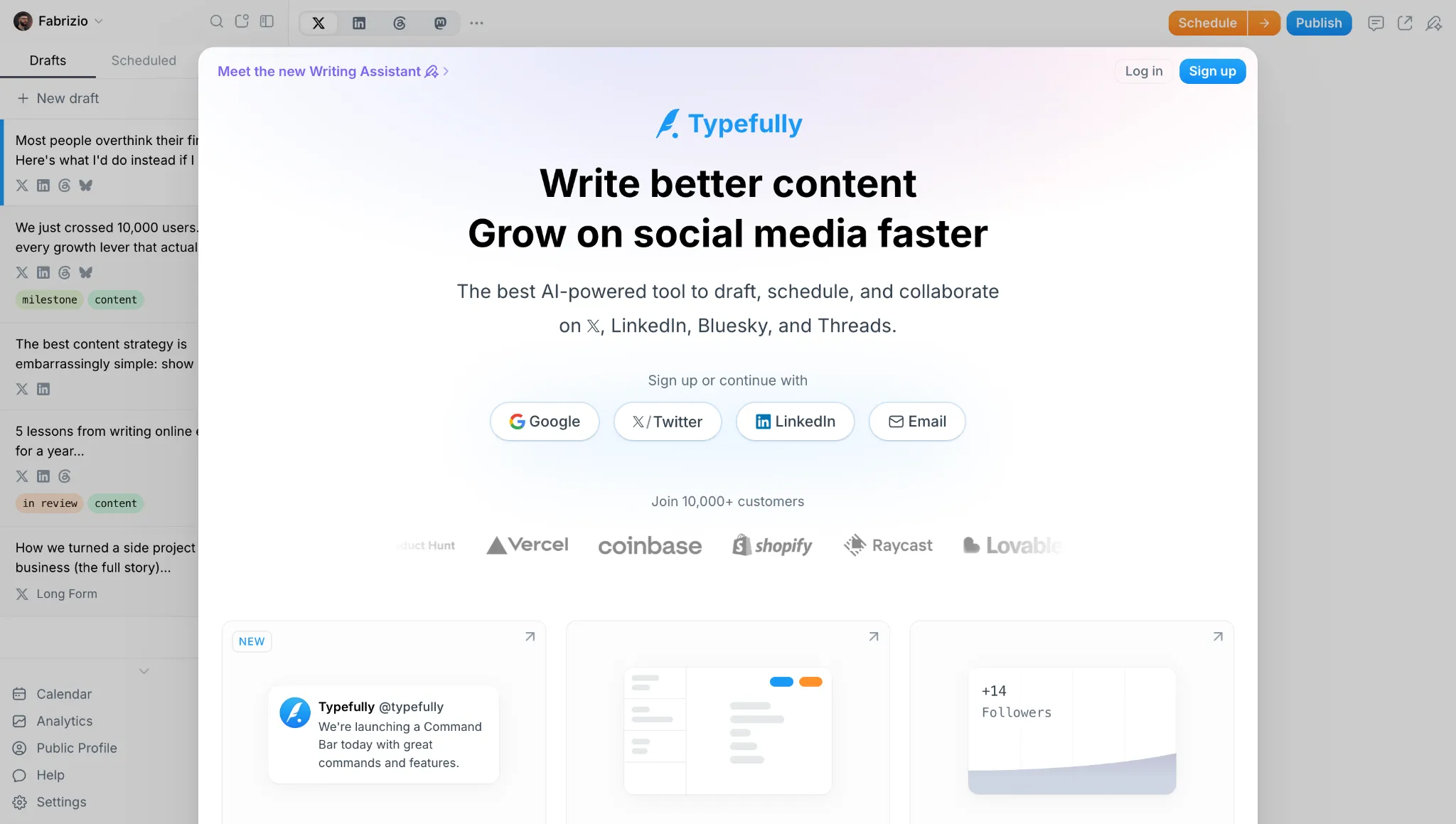
Typefully started as a threading tool for X and has since expanded into a multi-platform option covering LinkedIn, X, Bluesky, Threads, and Mastodon. If you're building a presence across platforms and don't want to pay separately for a LinkedIn content tool and a TweetHunter subscription, Typefully consolidates both into one workflow.
Best for: Multi-platform creators who are active on both LinkedIn and X and want to manage both from a single tool without doubling their costs.
Key features:
Limitations: LinkedIn-only creators will find the feature depth thinner than a dedicated LinkedIn tool. LinkedIn profile tagging is not supported due to LinkedIn API restrictions.
Pricing: Starting at $10/mo, making it one of the most affordable AI-included options in this comparison. There is also a free plan.
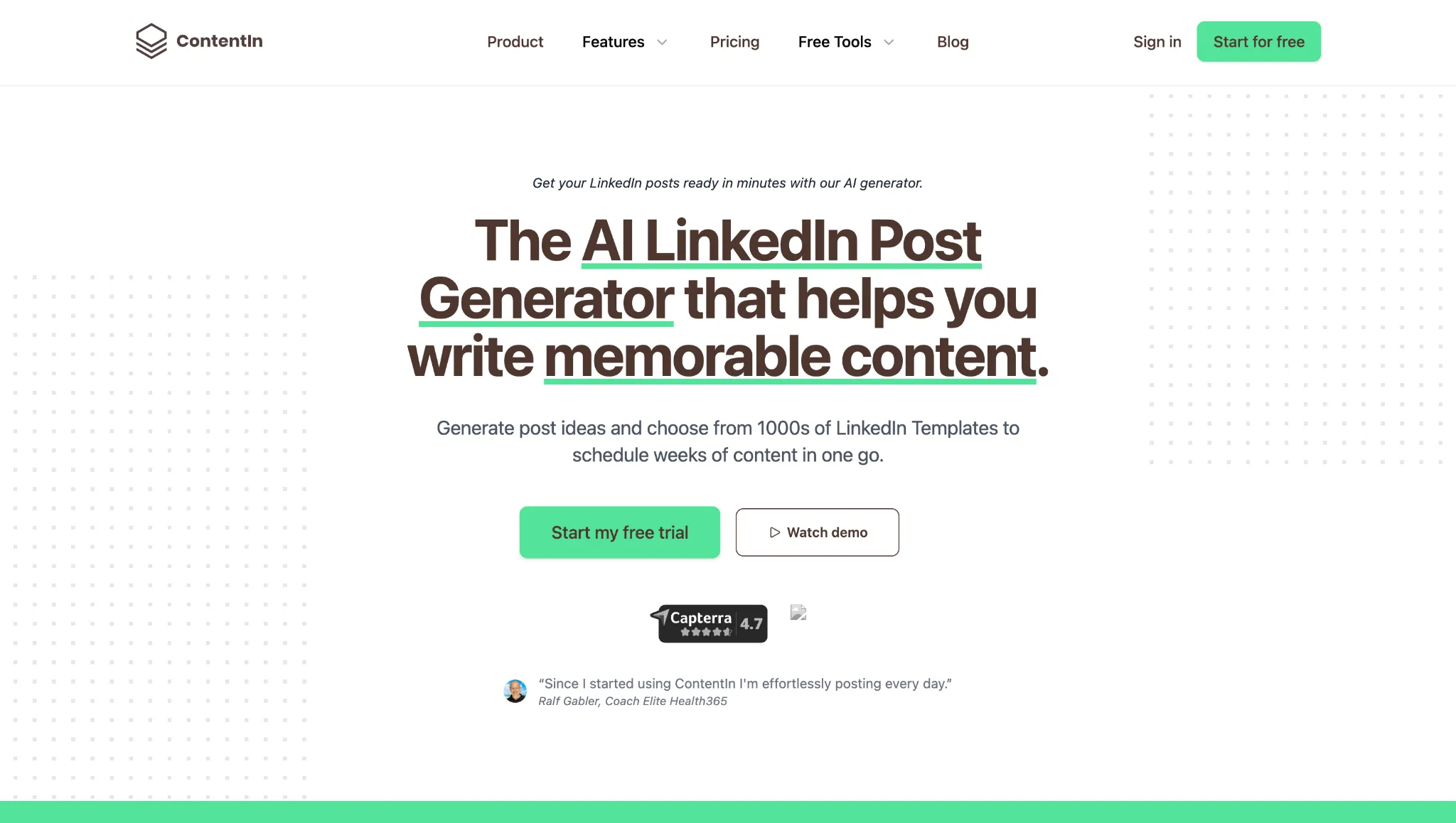
ContentIn’s AI Ghostwriter feature generates posts trained on your own past content. The tool also covers post scheduling, templates, and first-comment scheduling.
Best for: Creators earlier in their LinkedIn journey who want to test AI-assisted content before committing to a paid plan.
Key features:
Limitations: AI quality is competent rather than exceptional at the lower tiers. The tool is LinkedIn-only, so it won't serve multi-platform creators.
Pricing: Essentials at $19/mo; Creator at $39/mo; Pro at $59/mo.
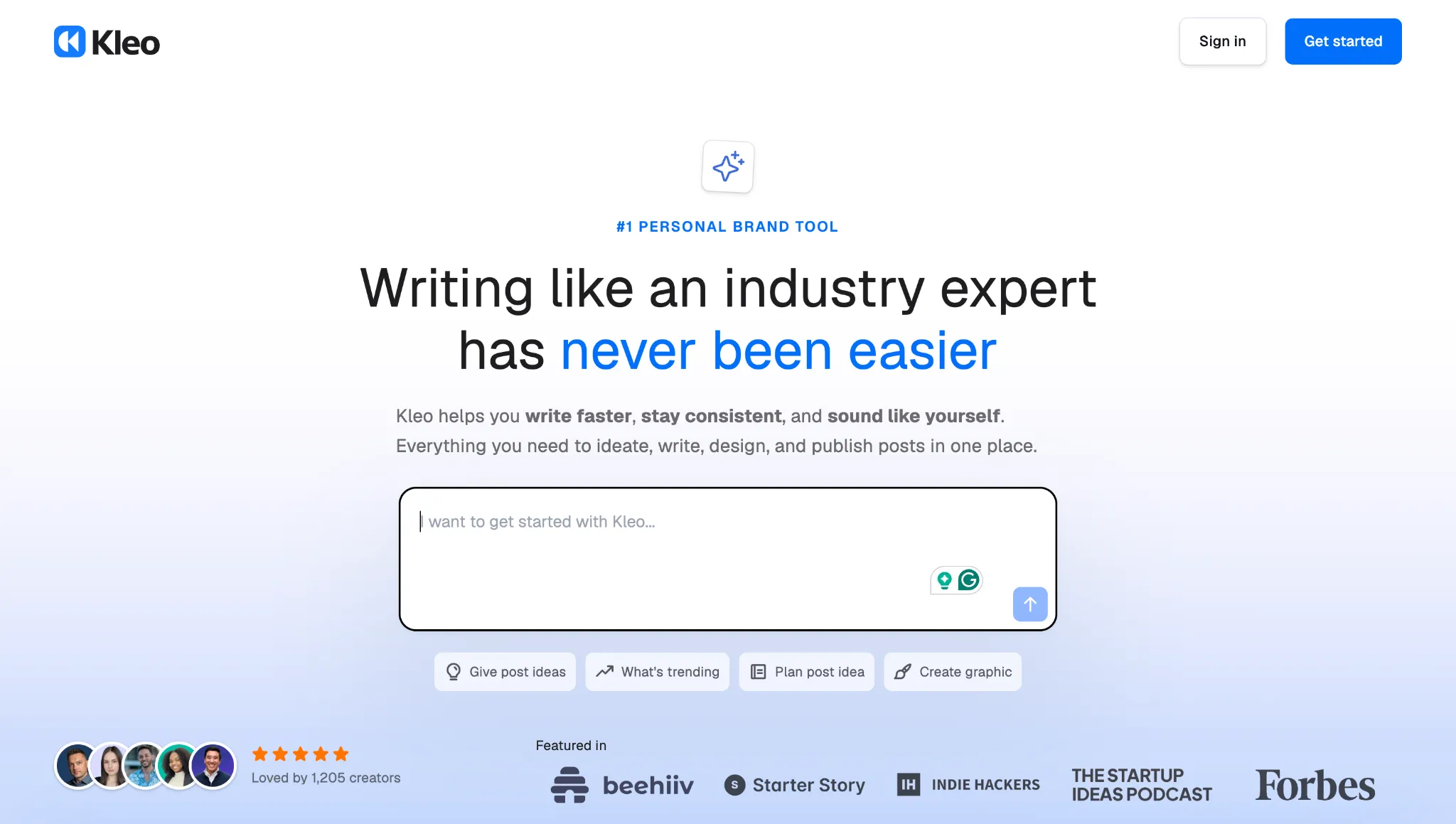
Kleo is a personal brand AI built around a persistent knowledge base. Rather than generating from a blank slate each time, Kleo builds an identity profile and writing style model that compounds over time. The original Chrome extension was shut down by LinkedIn in 2025 following a cease-and-desist, and Kleo now operates as a web app with a safer companion extension.
Best for: Creators who think deeply about their personal brand and want an AI tool that builds a genuine long-term model of their thinking, rather than a quick-draft generator.
Key features:
Limitations: At $99 per month it is the most expensive solo-creator tool in this comparison by a significant margin. There is no post scheduling built in.
Pricing: $99/mo, or approximately $79/mo on annual billing ($999/yr).
Every tool in the previous section was built for one person. Taplio has no admin console, no approval workflows, and no mechanism to distribute pre-approved content to a team, so if you're trying to scale LinkedIn activity across a group of reps, you're using the wrong category of tool entirely.
This section covers the best alternatives to use when you want to run a team-led distribution strategy.
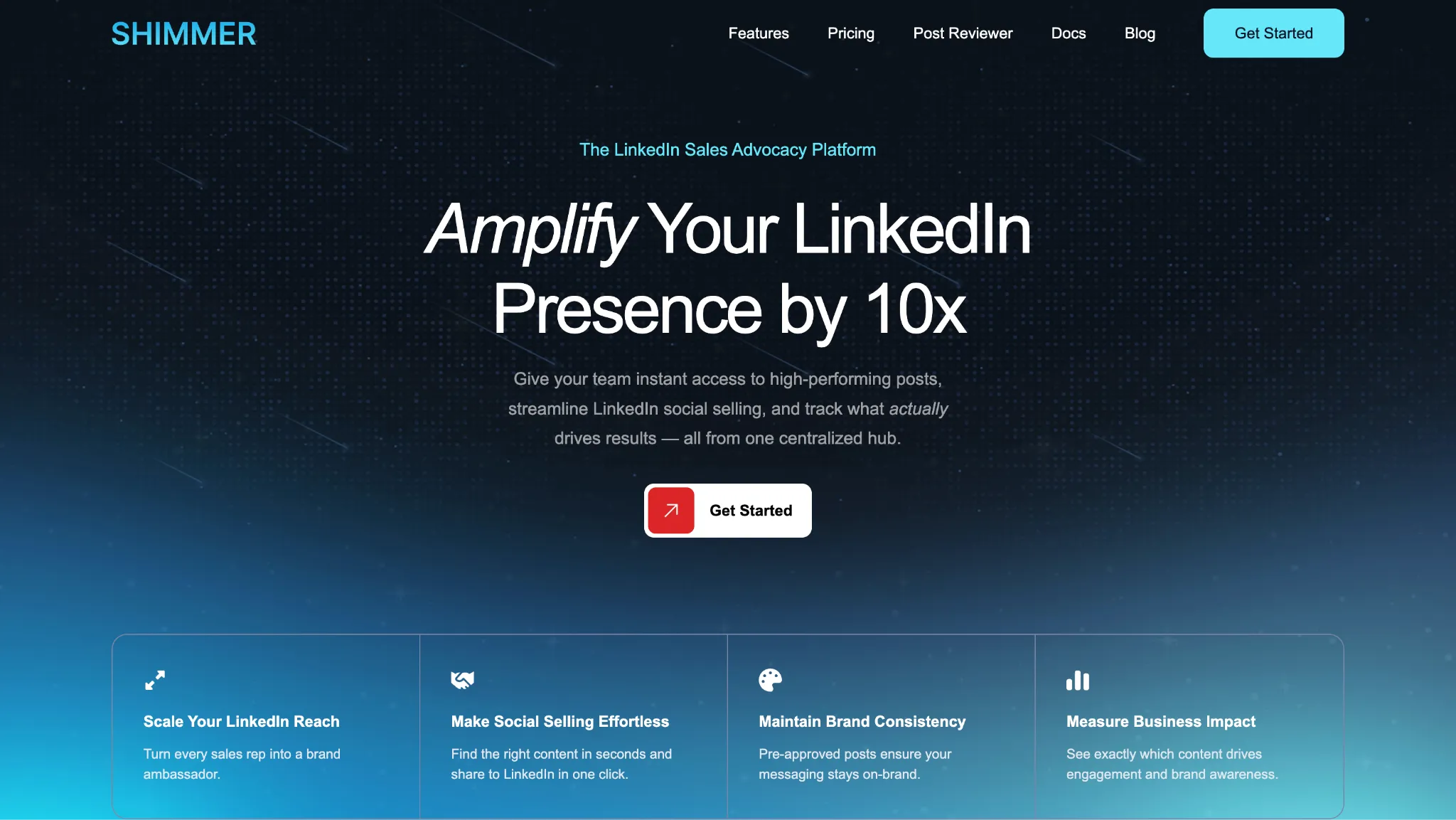
Shimmer is a LinkedIn-native advocacy platform built specifically for B2B sales and marketing teams. Marketing creates and approves content in a centralized library; sales reps access that content, add a personal note if they want, and share it to their personal LinkedIn profiles with one click.
The Slack integration pushes recommended posts to a dedicated channel so reps can share without leaving Slack.
Best for: Growth-stage B2B sales and marketing teams that want reps consistently posting on LinkedIn without it becoming a second job.
Key features:
Limitations: Shimmer is LinkedIn-first and not built for multi-platform advocacy. Teams that need to coordinate employee sharing across Instagram, X, or Facebook alongside LinkedIn will need a different tool.
Pricing: Basic at $99/mo (up to 25 users, 100 posts); Pro at $199/mo (up to 100 users, 200 posts); Enterprise at custom pricing.
If you want to understand how the highest-performing B2B sales teams structure their LinkedIn programs before choosing a platform, Shimmer's LinkedIn Employee Advocacy Program Guide is worth checking out first.
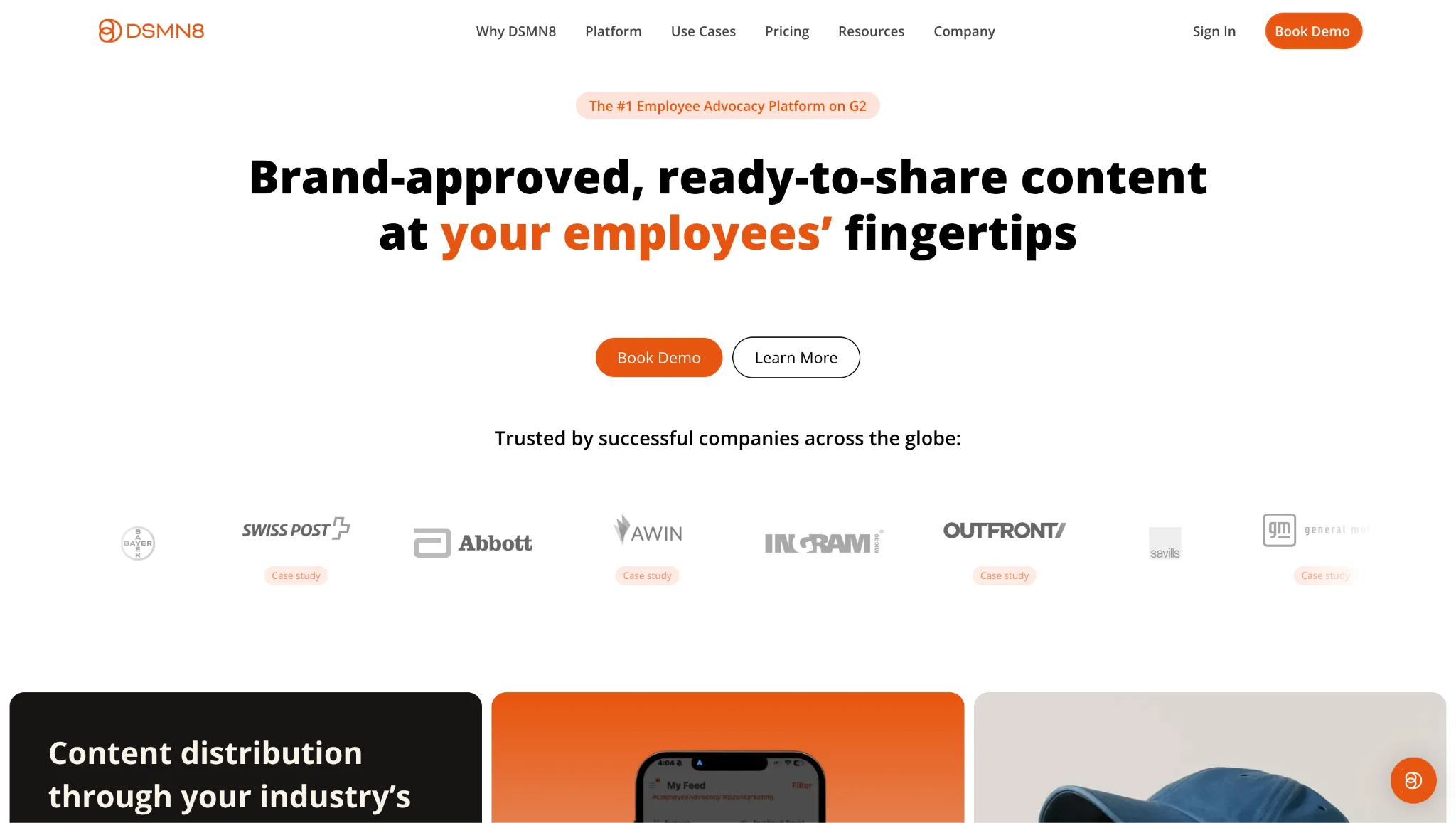
DSMN8 is one of the most established employee advocacy platforms in the market. It goes beyond content distribution, offering an Executive Influencer Platform for C-suite thought leadership and a gamification layer with leaderboards and prizes.
Best for: Mid-market to enterprise organizations with dedicated communications or social teams that need a full-featured advocacy platform with deep integrations and optional managed support.
Key features:
Limitations: Pricing starts from approximately $850 per month, putting it out of reach for most growth-stage teams. Implementation timelines are longer than lighter-weight platforms like Shimmer.
Pricing: Custom. TrustRadius lists pricing starting from ~$850/mo. Custom quote required.
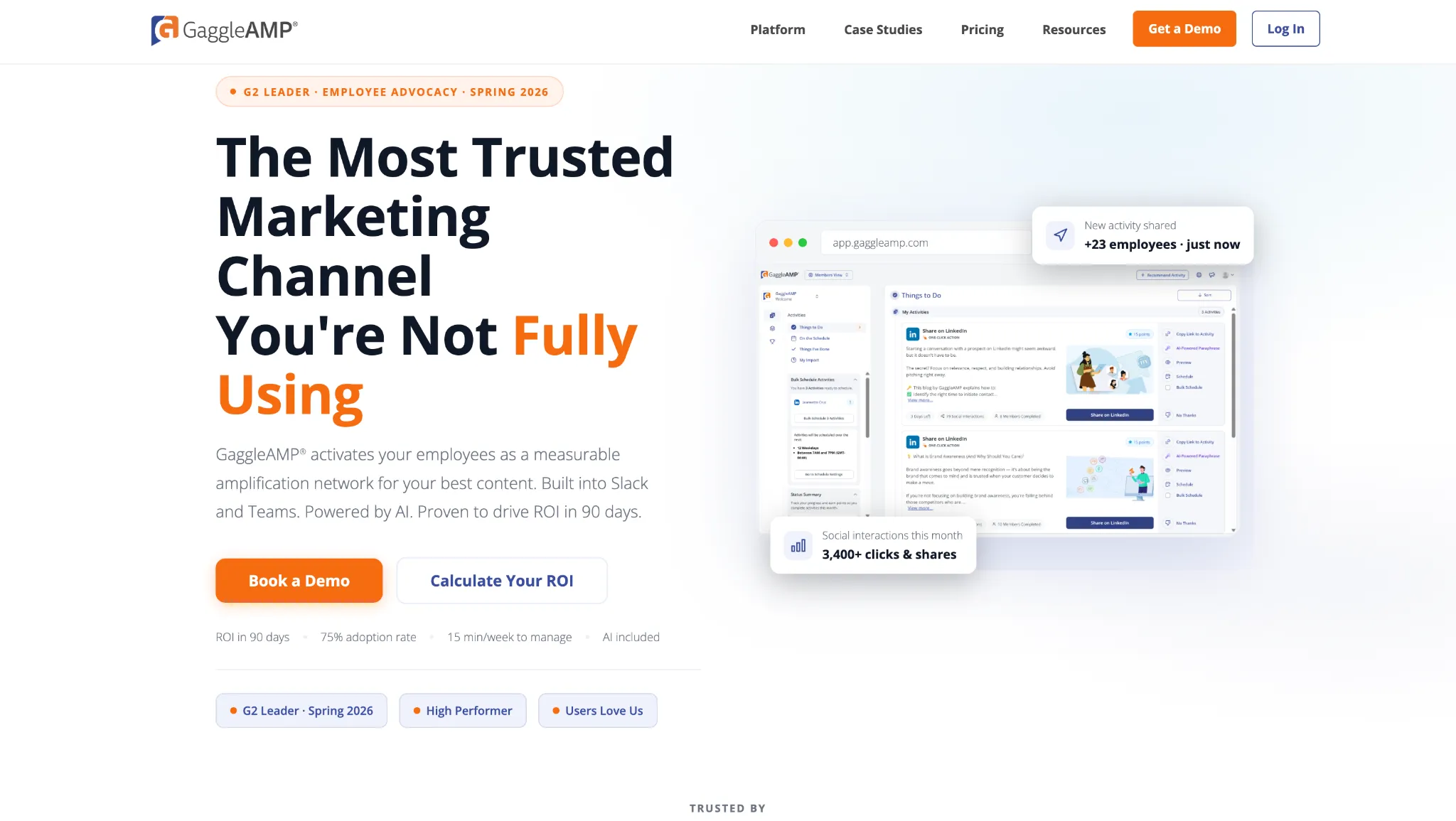
GaggleAMP takes a more structured approach to advocacy than most. Admins assign specific engagement activities with point values: comment on this post, share this update, like this article. That activity-assignment model gives marketing and sales leadership precise control over what employees are doing on LinkedIn.
Best for: Enterprise sales and marketing teams that need structured campaign control, cross-platform reach, and UTM attribution tying employee shares back to pipeline.
Key features:
Limitations: G2 reviewers describe the admin interface as dated and the mobile app as clunky. Pricing by employee count rather than seats means costs scale quickly for larger organizations.
Pricing: Custom. Priced by company employee count, not per-seat. Billed annually with a two-year default contract. Custom quote required.


