
May 15, 2026
Is EveryoneSocial costing you $31,000 a year? Here are 10 platforms that do more for your B2B sales team for a fraction of the price.
Employee advocacy is one of the highest-leverage moves a B2B team can make on LinkedIn. Company page organic reach has dropped 60-66% since 2024, yet employees average 10x more connections than a company has followers, an employee-shared content generates 8x more engagement than content shared from brand channels.
The opportunity is clear. The challenge is finding the right tool to act on it. EveryoneSocial works well for large enterprise programs, but it’s pricing puts it out of range for most companies, especially if your primary focus is LinkedIn. Buyers report paying an average of $31,000 per year, and recent reviews have flagged stagnant product development, mobile login issues, and a gamification model one Gartner reviewer called "quickly abandoned by most."
If EveryoneSocial’s price or complexity is too much, this guide covers the top alternatives worth evaluating, with an honest take on which platform is right for each use case.
Before we cover the top EveryoneSocial alternatives, it’s worth covering the specific pain points that send buyers elsewhere.
EveryoneSocial is feature-rich, which is useful if you have a dedicated advocacy program manager. It becomes a barrier if you are trying to get a 20-person sales team to engage and share more of your LinkedIn content.
The DSMN8 Employee Advocacy Benchmark Report 2025, found that the single biggest driver of advocacy program failure is low employee participation, and complexity is a primary culprit.
EveryoneSocial supports LinkedIn, Twitter, Facebook, and Instagram. That’s great if your buyers live across all four. But for most B2B companies, LinkedIn is where social selling actually happens.
Paying for and managing multiple platforms when 95% of your results come from one network is a high cost with no real return.
Points, badges, and challenges are designed to motivate participation. But sales reps are already motivated, just by different things: pipeline, quota, and competitive ranking. A leaderboard tied to real sharing activity resonates better with sales teams than abstract badges and points.
EveryoneSocial's strength is aggregating content from RSS feeds and external web sources. That works well for sharing industry news. But it’s less helpful when your marketing team has a library of approved posts and assets that they want to curate for sales team members to share.
Capterra reviewers have also noted missing support for larger media files, limited newsletter formatting, and no integration with newer social platforms, describing the product as having added no meaningful new features over a two-year period.
| Platform | LinkedIn Focus | Ease of Use | Content Management | Multi-Platform | Best For |
|---|---|---|---|---|---|
| Shimmer | High | Simple | Centralized file library | LinkedIn only | B2B sales teams on LinkedIn |
| GaggleAMP | Medium | Moderate | Activity-based curation | 14+ networks | Enterprise multi-channel advocacy |
| DSMN8 | Medium-High | Moderate | Campaign-led, AI-assisted | LinkedIn-primary | Brand-controlled campaign advocacy |
| PostBeyond | Medium | Moderate | Distribution-focused | Multi-platform | Scaling content across large teams |
| Sociabble | Medium | Moderate | Internal comms + advocacy | Multi-platform | Global advocacy + internal comms |
| Haiilo | Medium | Moderate | Intranet-first | Multi-platform | Intranet-native advocacy |
| Hootsuite Amplify | Medium | Moderate | Hootsuite-dependent | Multi-platform | Teams in the Hootsuite ecosystem |
| Ambassify | Medium | Moderate | Community campaigns | Multi-channel | Culture-led community advocacy |
| Sprout Social Advocacy | Medium | Simple | Sprout-dependent | Multi-platform | Social teams using Sprout |
| Firstup | Low-Medium | Complex | Segmented delivery | Multi-channel | Enterprise frontline communications |
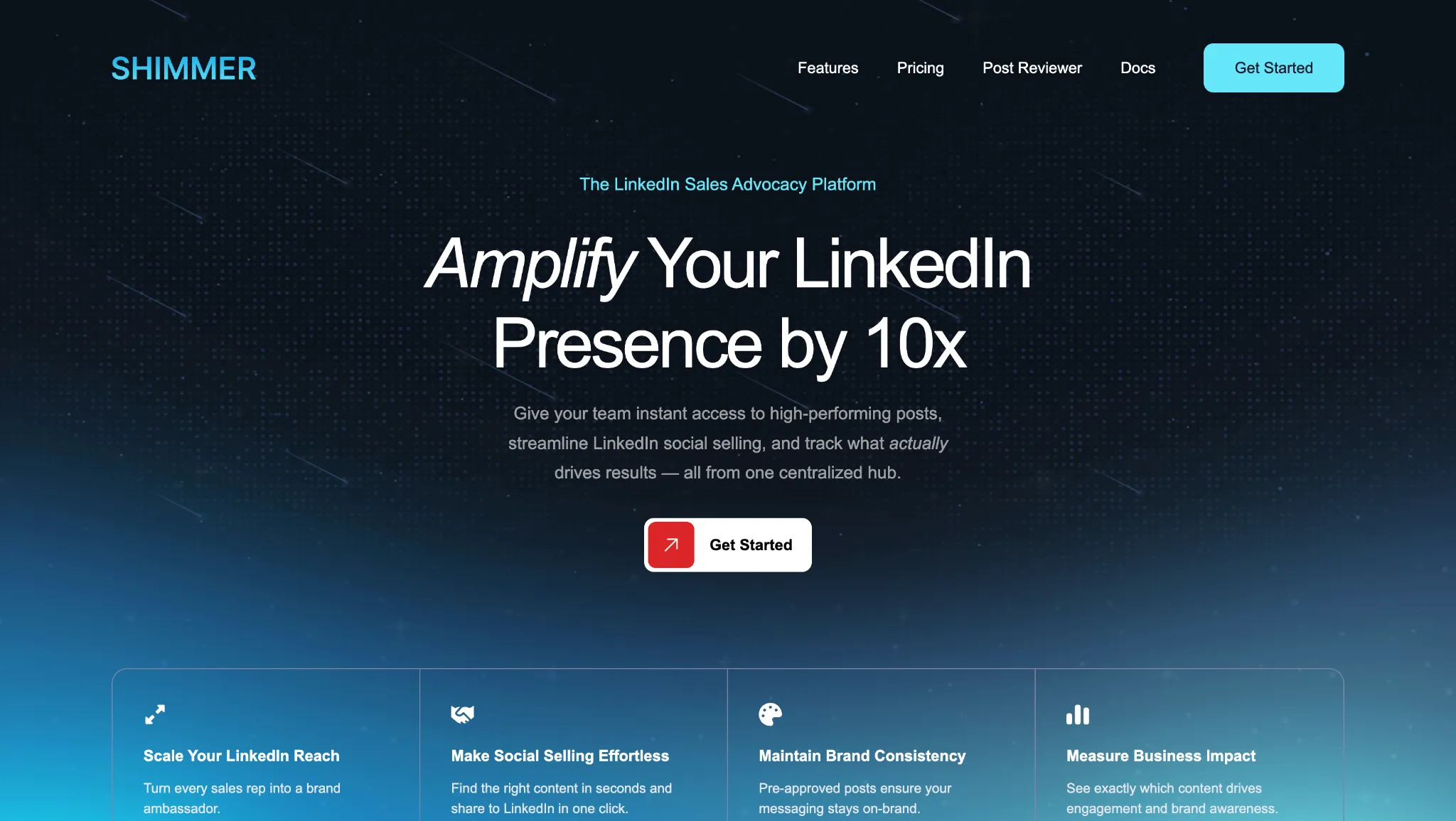
Shimmer is a LinkedIn-first advocacy platform built for sales teams to quickly and easily share marketing-approved posts. Marketing uploads content to a centralized library, and sales shares that content with one click. Shimmer also pushes recommended posts to Slack so reps can share posts without having to login to another tool every day.
Best for: B2B sales and marketing teams running a LinkedIn-first social selling or demand generation program.
Key features:
Limitation to note: Shimmer is LinkedIn-only. Teams that need advocacy across Twitter, Facebook, Instagram, or other platforms will need a different tool.
Pricing: Basic at $99/month (up to 25 users), Pro at $199/month (up to 100 users), and Enterprise at custom pricing for unlimited users.
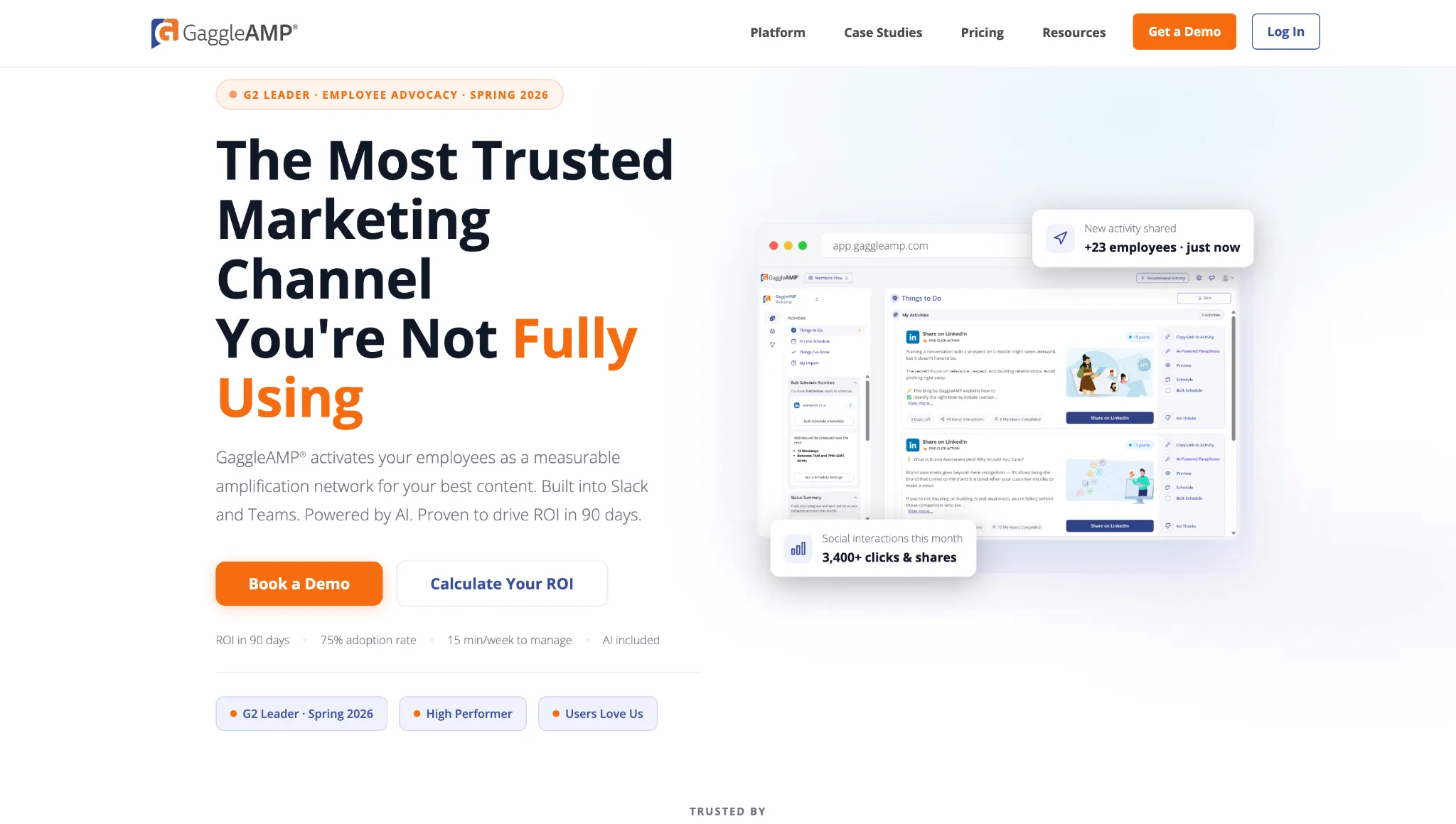
GaggleAMP is one of the most established social advocacy platforms. Managers create assigned activities that employees complete from a personal dashboard, with points, rewards, and leaderboards tracking participation across 14-plus social networks.
Best for: Enterprise or mid-market teams running structured, multi-platform advocacy programs where measurable Earned Media Value and reward-based gamification are core requirements.
Key features:
Limitation to note: The breadth of GaggleAMP's feature set introduces a steeper learning curve, and some reviewers on G2 describe the UI as feeling dated, particularly on mobile. Teams that only need LinkedIn-focused sharing will find it more complex than they need.
Pricing: Quote-based. Standard contracts are two years.
DSMN8 is built around campaign management and AI-assisted content creation, with analytics that measure performance at the campaign level rather than just in aggregate. DSMN8 also publishes the Employee Advocacy Benchmark Report, the most-cited primary research in the employee advocacy space.
Key features:
Limitation to note: Some G2 reviewers note that LinkedIn re-validation is required periodically, and that posts can feel automated if employees skip the personalization step.
Pricing: Three tiers from approximately $850 to $1,750 per month (per TrustRadius); a 30-day free trial is available.
PostBeyond (now part of Influitive) combines employee and customer advocacy in a single platform. The platform focuses on structured content distribution with a clean employee-facing interface, AI caption generation, and a rewards catalog that ties employee advocacy to the same program used for customer advocacy.
Best for: Marketing and communications teams managing high-volume content distribution across large employee bases, particularly those that also run customer advocacy programs and want both in one tool.
Key features:
Limitation to note: Some Gartner Peer Insights reviewers note glitches around LinkedIn tagging when reposting manually, and since the Influitive acquisition, the roadmap has leaned toward AI and rewards rather than UX improvements. Traditional enterprise pricing is a barrier for small to mid-market teams.
Pricing: Not publicly listed. PostBeyond is enterprise-priced and requires a demo to receive a quote.
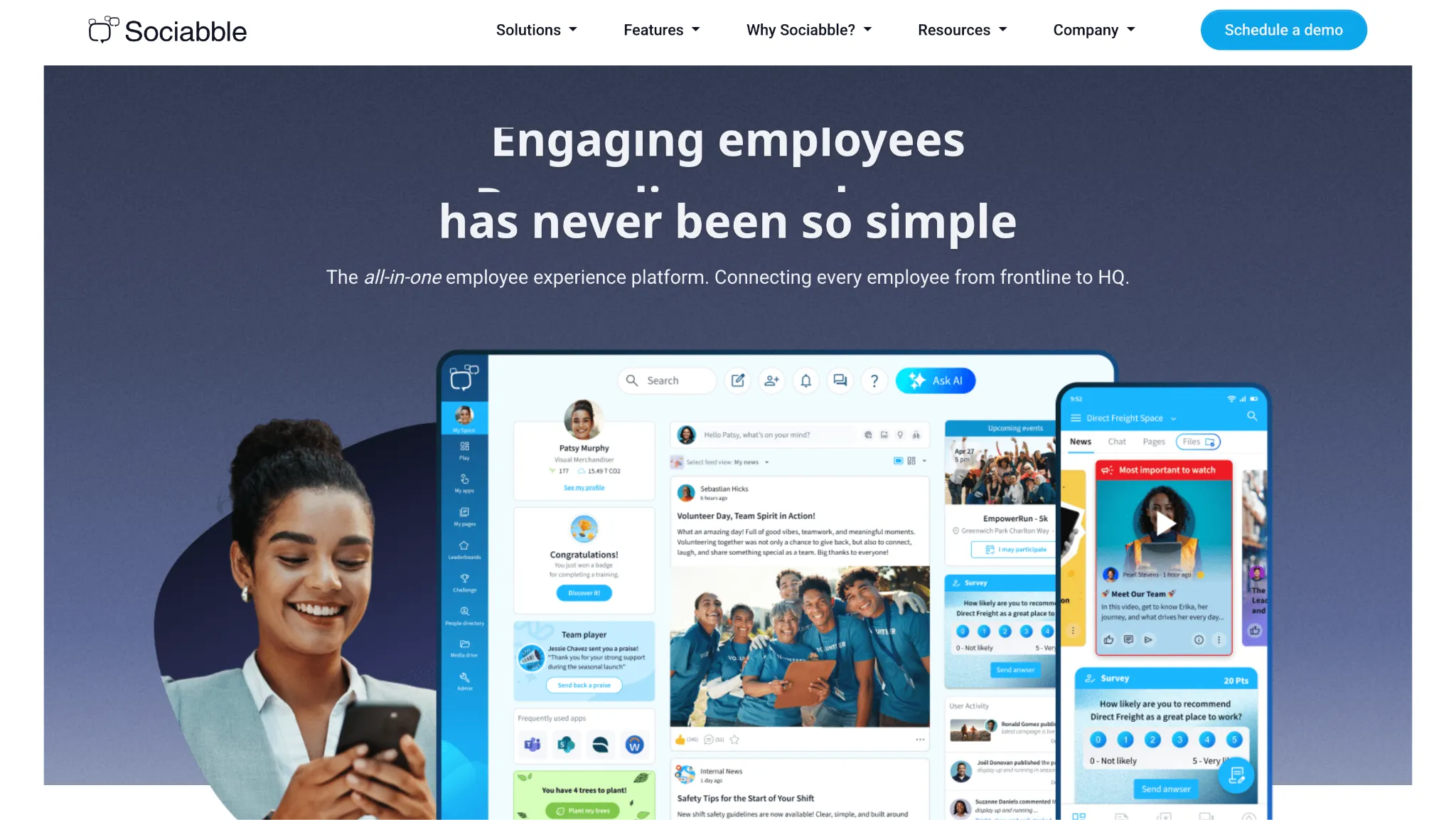
Sociabble bundles employee advocacy, internal comms, intranet, and engagement in one product. It’s built for global enterprises that want to embed advocacy within a broader digital workplace strategy.
Best for: Global enterprises with multilingual workforces and frontline or deskless workers who want advocacy integrated within a broader employee experience platform.
Key features:
Limitation to note: G2 reviewers mention "Missing Features" and "Limited Customization" as recurring themes, and the learning curve to master the full feature set is real. For teams whose only goal is LinkedIn sharing, Sociabble is considerably more complex than what’s needed.
Pricing: Not publicly listed. Sociabble prices based on company size, number of users, and modules needed, and requires a sales conversation for a quote.
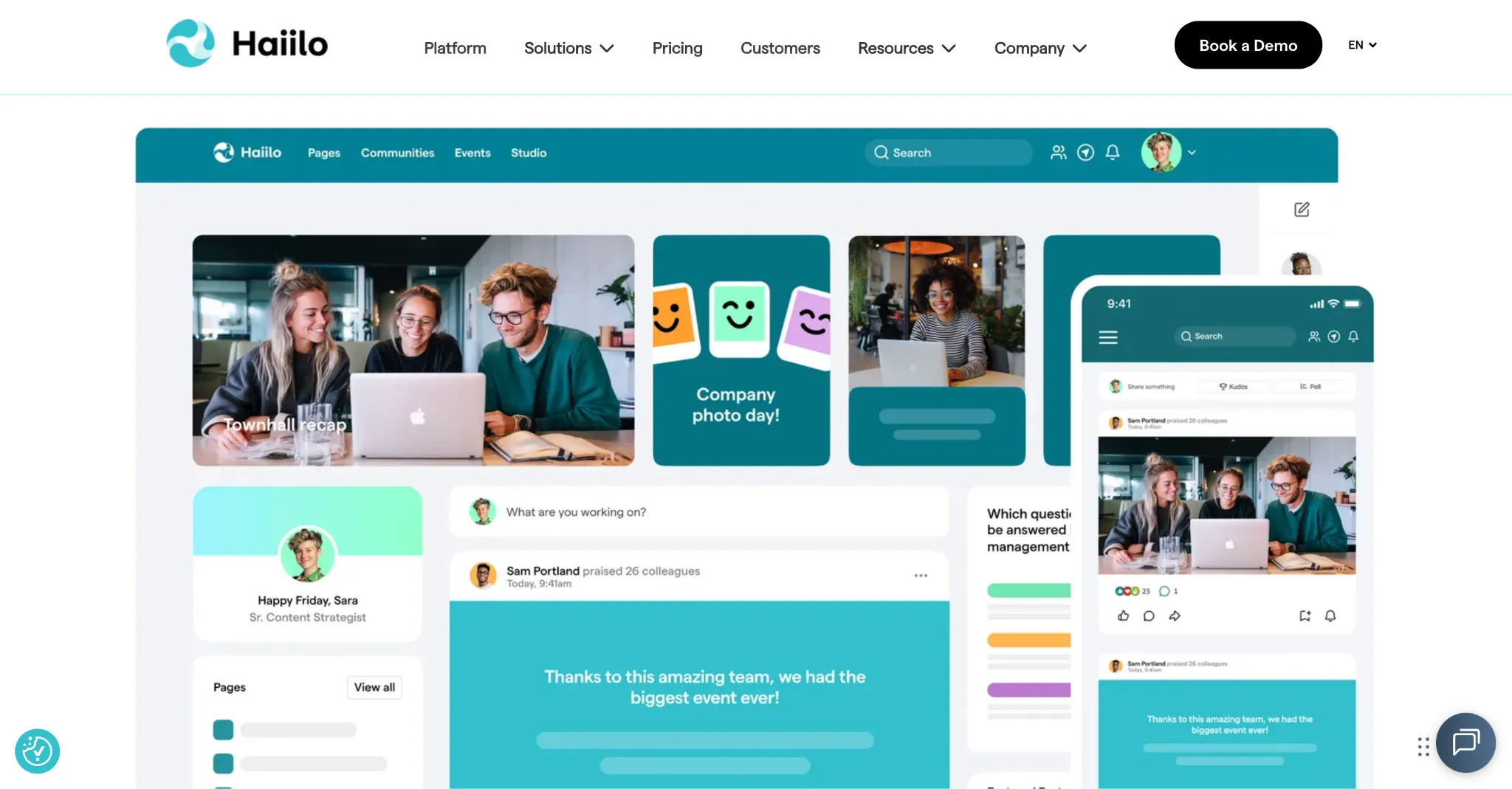
Haiilo combines employee advocacy, social intranet, and employee surveys into a single platform that now reaches more than 3 million employees. The focus is vendor consolidation: one platform replacing separate intranet, comms, and advocacy tools.
Best for: Mid-to-large enterprises that want an AI-powered intranet as their primary platform, with advocacy included.
Key features:
Limitation to note: Some legacy Smarp-era Capterra reviewers reported slow customer service response times and described pricing as steep relative to advocacy-only alternatives.
Pricing: Not publicly listed. Haiilo charges an annual platform fee that covers the full feature set, with plans starting at a minimum of 500 user licenses. Contact sales for a quote.
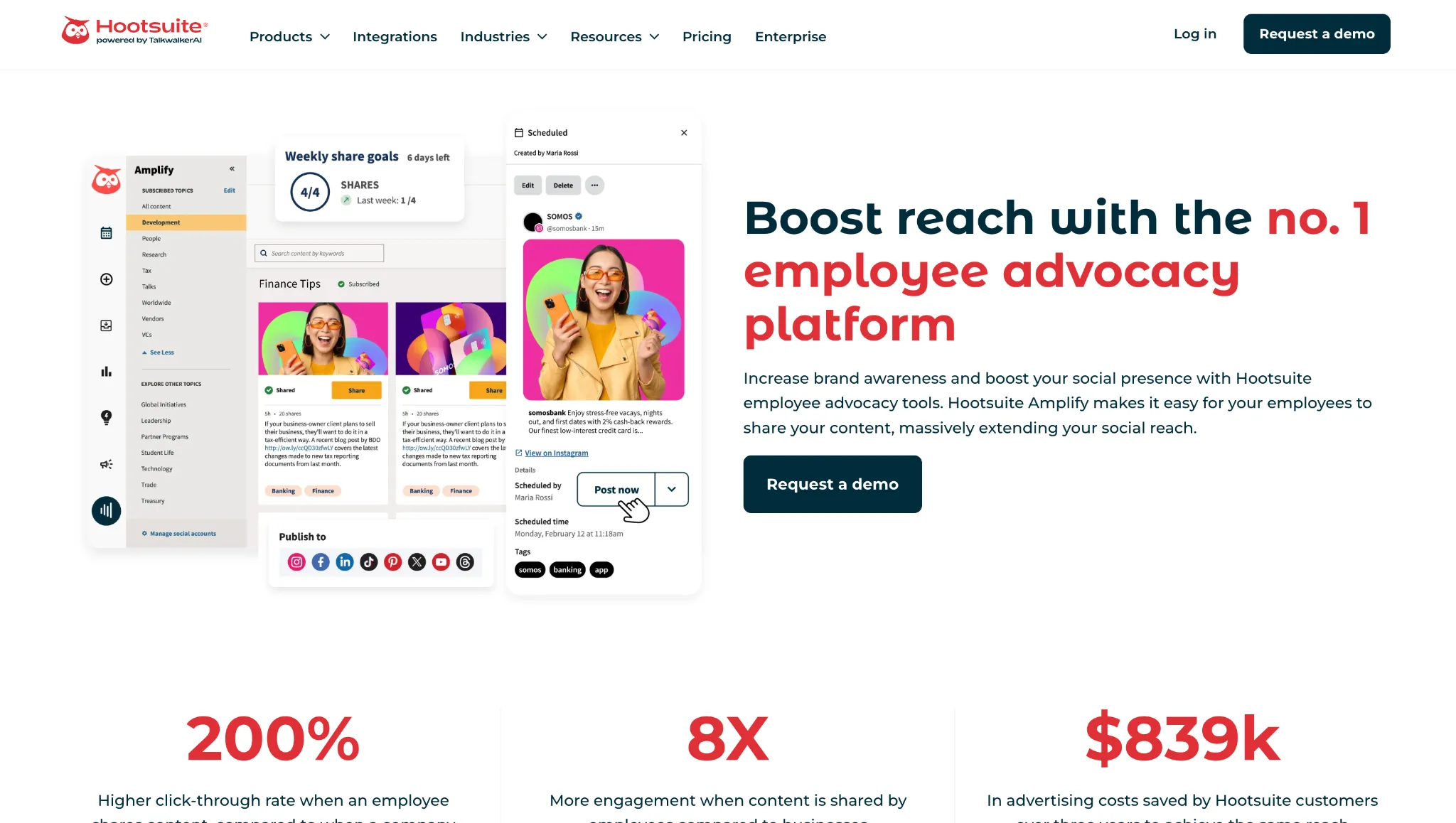
Hootsuite Amplify is the employee advocacy module bundled into Hootsuite's Enterprise plan. If your social media team is already running scheduling, listening, and analytics inside Hootsuite, Amplify extends that investment to employee sharing.
Best for: Organizations already on Hootsuite Enterprise that want to add employee advocacy without introducing a separate tool.
Key features:
Limitation to note: Amplify is an add-on to a larger platform, not a standalone product. Companies that do not already use Hootsuite's core suite will pay for considerable infrastructure they do not need just to access the advocacy features.
Pricing: Not publicly listed. Amplify is bundled into Hootsuite's Enterprise plan, which requires a custom quote. Hootsuite's entry-level plans start at $99/month but do not include Amplify.

Ambassify treats advocacy as a community program rather than a content-distribution tool. Employees do not just share posts; they participate in polls, feedback loops, Glassdoor campaigns, and reward redemptions. The platform starts with a Pulse assessment to diagnose program maturity before recommending an activation path.
Best for: Culture-driven brands that want advocacy to feel like community involvement rather than a content-sharing mandate.
Key features:
Limitation to note: Some G2 reviewers note the absence of TikTok integration and an administrator UX that takes time to master. The community-first model is powerful for culture-led brands but may lack the structured content controls and LinkedIn-focused analytics that pure B2B sales teams need.
Pricing: Three published tiers, all billed annually: Essential from €800/month (up to 200 employees), Premium from €1,500/month (200 to 500 employees), and Enterprise at a custom quote for companies with over 500 employees.
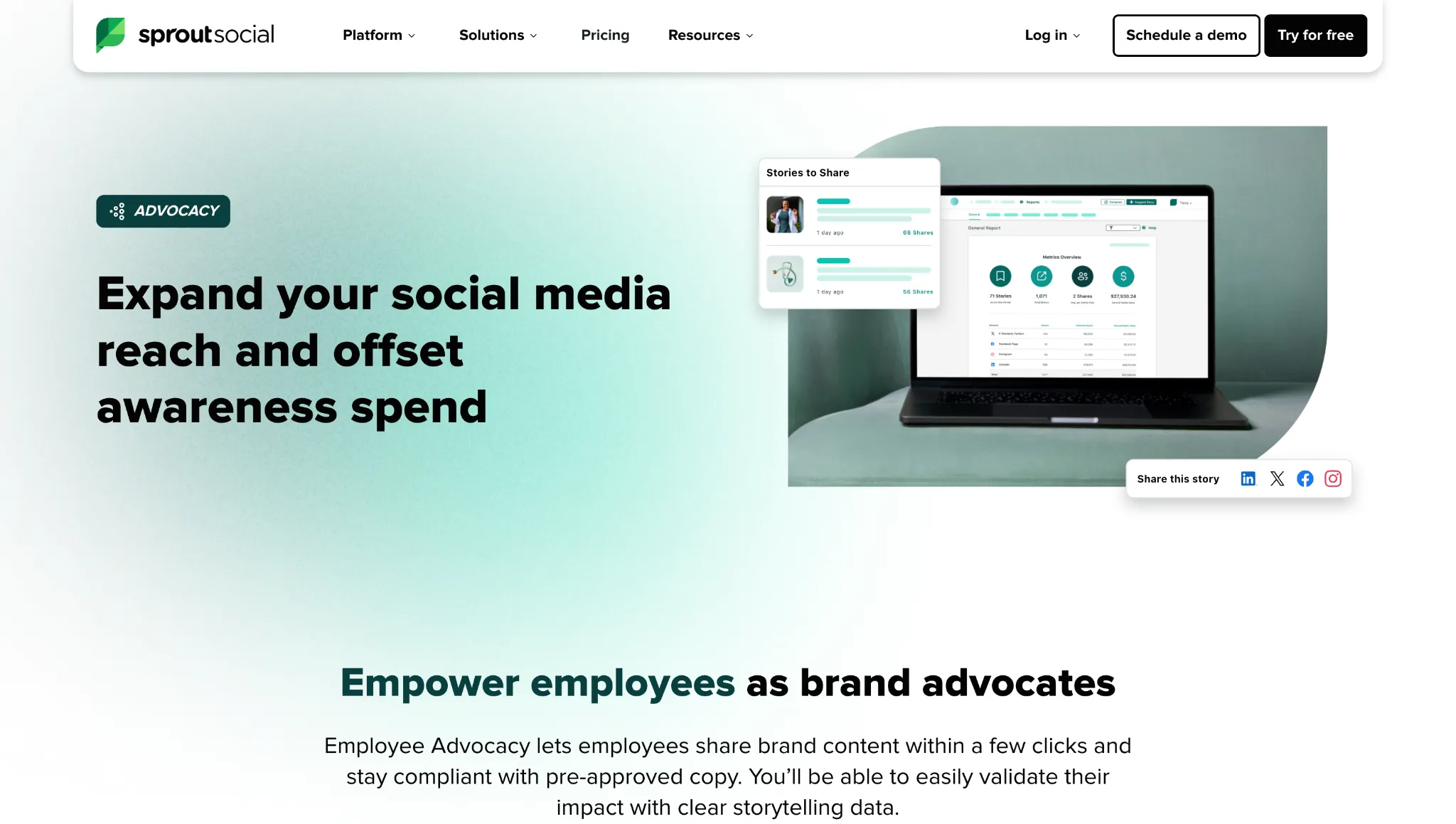
Sprout Social's advocacy module is built directly into its social media management suite. Marketing curates approved content and distributes it to employees for sharing. For companies where the social media team owns the advocacy program, it is a natural extension of the tools they already use daily.
Best for: Social-media-led organizations already on Sprout Social who want to incorporate employee sharing into their existing workflow.
Key features:
Limitation to note: Like Hootsuite Amplify, Sprout Social’s Employee Advocacy is a feature within a larger platform rather than a standalone tool. One TrustRadius reviewer noted that major changes to content categorization were made with little advance notice, causing a strategy disruption.
Pricing: Employee Advocacy is a paid add-on available on Sprout's Standard plan and above, with base plans starting at $249/seat/month billed annually. The advocacy add-on itself is not publicly priced and requires a separate quote from sales.
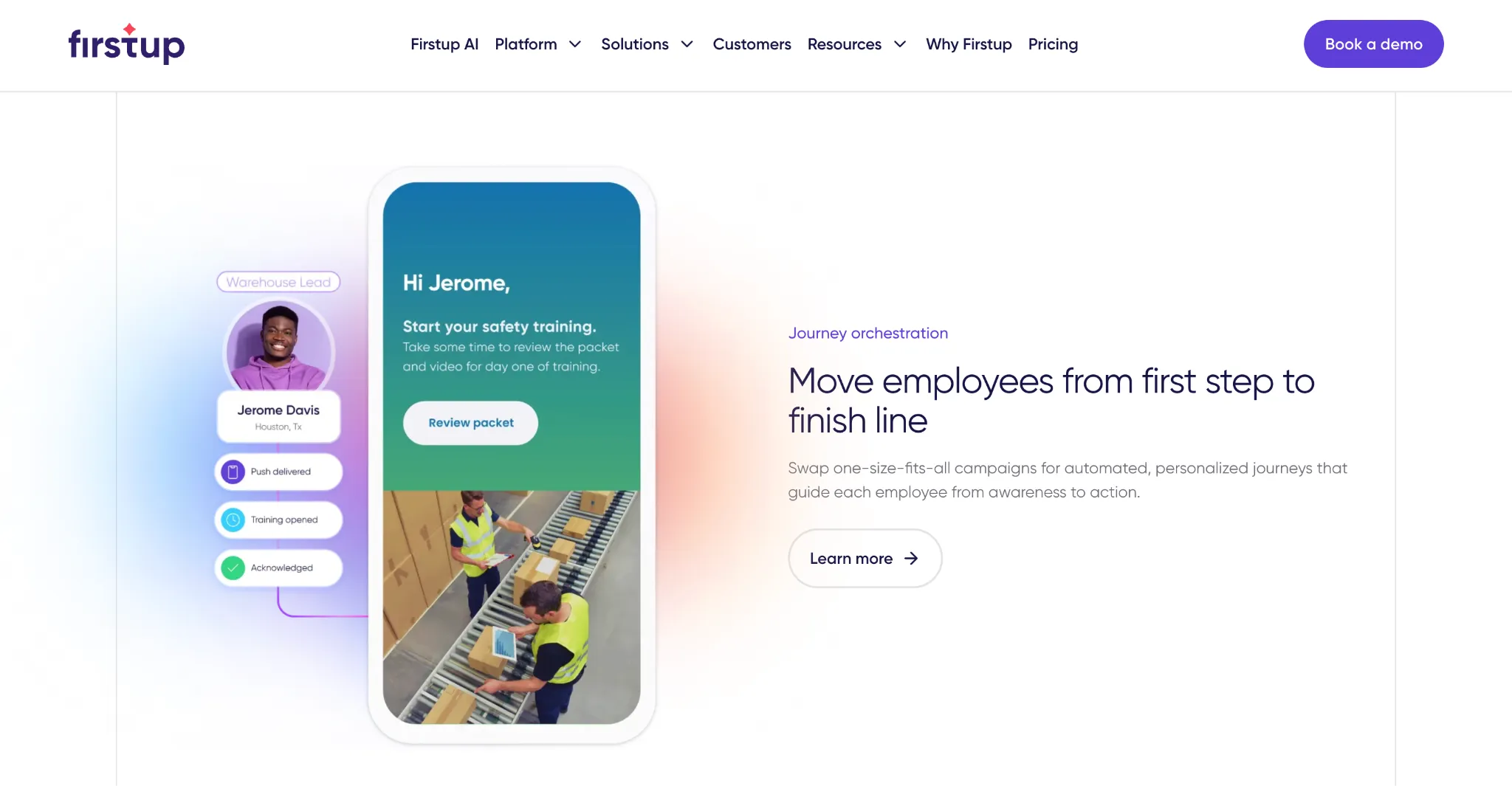
Firstup was formed from the 2021 merger of SocialChorus and Dynamic Signal. Today, it’s an employee communications platform with advocacy built in, not a pure advocacy tool. It excels at reaching deskless and frontline workforces across mobile, intranet, email, and digital signage.
Best for: Large enterprises with deskless or frontline workforces that need advocacy embedded within a broader internal communications platform.
Key features:
Limitation to note: Firstup is opaque on pricing and can be complex to implement. If LinkedIn advocacy is your primary goal, Firstup is likely more platform than your team needs.
Pricing: Not publicly listed. Firstup is enterprise-only and requires a sales conversation for a quote. Pricing is not disclosed publicly and varies significantly based on workforce size, channels, and modules required.
Lists are easy. Decisions are hard. Before you book five different demos, run through these questions …
DSMN8’s Benchmark Report 2025 found that low employee participation is the single most common reason for program failure. Complexity is the friction that causes it.
When you evaluate platforms, pay attention to how easy it is for new users to share posts, rather than a laundry list of available features. A tool your reps love using with five features will outperform a tool they ignore with fifty.
75% of B2B buyers use social media to make purchasing decisions, and 50% specifically use LinkedIn as a trusted source. If your buyers are primarily on LinkedIn, multi-platform infrastructure is not a feature; it’s just noise.
Choose a platform that optimizes for LinkedIn, not one that just sounds more comprehensive.
There is a big difference between a tool that helps employees share your marketing team's original content and a tool designed to help employees share interesting articles from around the web.
Both approaches have merit, but they’re different strategies. If your marketing team wants sales to share specific pre-approved posts (like upcoming events, product launches, blog posts, etc.), confirm the platform is built around file management, not RSS aggregation.
EveryoneSocial's average annual contract is approximately $31,000, according to Vendr. That is the baseline to compare against. Several alternatives on this list, including Shimmer and DSMN8, publish transparent pricing online and are priced much more affordably (e.g., Shimmer starts at $99/month). Others require a sales conversation.
For any tool with opaque pricing, factor in not just the contract value but the procurement time (which can take weeks for enterprise tools).
Shimmer is built for one specific type of team: a B2B company where marketing creates content and sales shares it, LinkedIn is the primary channel, and the goal is to make posting a habit rather than a project.
Marketing uploads approved content to a searchable library; sales gets a Slack notification and shares to LinkedIn without opening a separate tab.
Shimmer is LinkedIn-only. If you need advocacy across multiple networks, GaggleAMP, DSMN8, Sociabble, or Haiilo are better fits. But at just $99/month for up to 25 users, it’s the most affordable platform on this list.
For a full feature-by-feature breakdown, check out our EveryoneSocial vs. Shimmer comparison. Not ready to commit? Start a free trial here!


